Why health data deserves special care
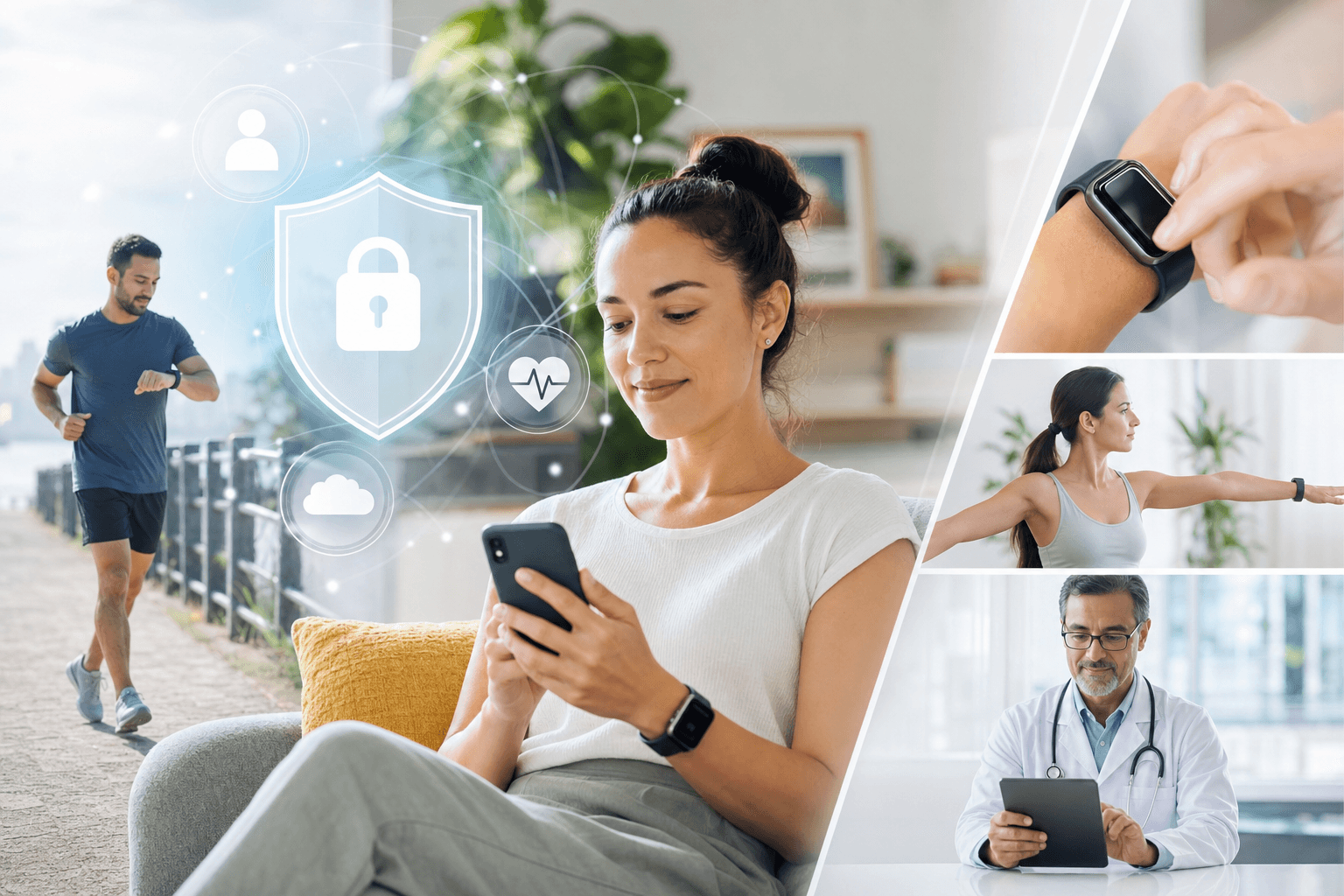
Health data is some of the most personal information there is. It can reveal conditions you have, medicines you take and habits you would rather keep private. As more of our health moves onto apps, wearables and online records, it is worth understanding what happens to that information and how you can protect it.
This is not about fear. It is about being an informed user, so that the convenience of health technology does not come at a cost you did not agree to.
What counts as health data
Health data is broader than your medical file. It includes obvious things like test results, diagnoses and prescriptions. It also includes the quieter signals collected by everyday tools: your step count, your sleep pattern, your heart rate, the symptoms you type into a checker, even the health articles you search for.
Individually, these fragments may seem harmless. Together, they can paint a detailed picture, which is exactly why they are valuable and why they deserve protection.
Consent: the heart of the matter
Consent means you understand and agree to how your data will be used before it is used. Good consent has a few features worth recognising.
It is specific
You should know what is being collected and for what purpose. Agreeing to share heart rate data with a doctor is very different from agreeing that an app may sell aggregated data to advertisers.
It is informed
The explanation should be in plain language, not buried in pages of dense terms. If you cannot tell what you are agreeing to, that is a warning sign.
It can be withdrawn
You should be able to stop sharing and, where possible, ask for your data to be deleted. A service that makes leaving difficult is treating your data as its asset rather than yours.
When you install a health app, it is worth spending two minutes on the permissions and privacy settings rather than tapping accept on autopilot.
Where your data can go
Once collected, health data can travel further than people expect. It may sit on the device, in the app maker's cloud servers, or with third parties who provide analytics or advertising. Some companies keep data tightly within the service. Others share or sell it, sometimes in a form that is supposed to be anonymous but can occasionally be re-identified.
The practical lesson is to prefer tools that are clear about this. A trustworthy product tells you plainly who sees your data and gives you control. A vague or evasive policy is itself a kind of answer.
Security: keeping data from the wrong hands
Consent decides who is allowed to see your data. Security decides whether anyone else can. Reputable services protect information with encryption, both while it travels over the internet and while it is stored. They limit which staff can access records and keep logs of who looked at what.
You have a role too. A few simple habits make a real difference.
Use a strong, unique password for health accounts, and turn on two-factor authentication where it is offered. Keep your phone and apps updated, since updates often fix security flaws. Be cautious about logging into health services on shared or public devices. And think twice before granting an app permissions it does not obviously need.
Special care in everyday life
In a small community, privacy can feel especially personal, because the people around you may know one another. That makes it all the more sensible to keep your screen private when viewing results and to be thoughtful about which family members or carers you share access with. Sharing can be helpful, but it should be your choice.
When something feels wrong
If you receive messages about health products you never enquired about, or you suspect an account has been accessed, treat it seriously. Change your password, review what you have shared, and contact the service. For anything involving your formal medical records, your clinic or doctor can advise on the proper process.
The balance to aim for
Health technology asks for a degree of trust in exchange for genuine benefits. The goal is not to refuse all sharing, but to share deliberately. Read the consent, choose services that respect you, protect your accounts, and keep control of who sees what.
If you are ever unsure whether to share sensitive information through an app or platform, your doctor or clinic can help you weigh it up. Your data is yours, and a little attention keeps it that way.
Smart health technology supports a longer, healthier life. Explore the wider Medtech health ecosystem.