
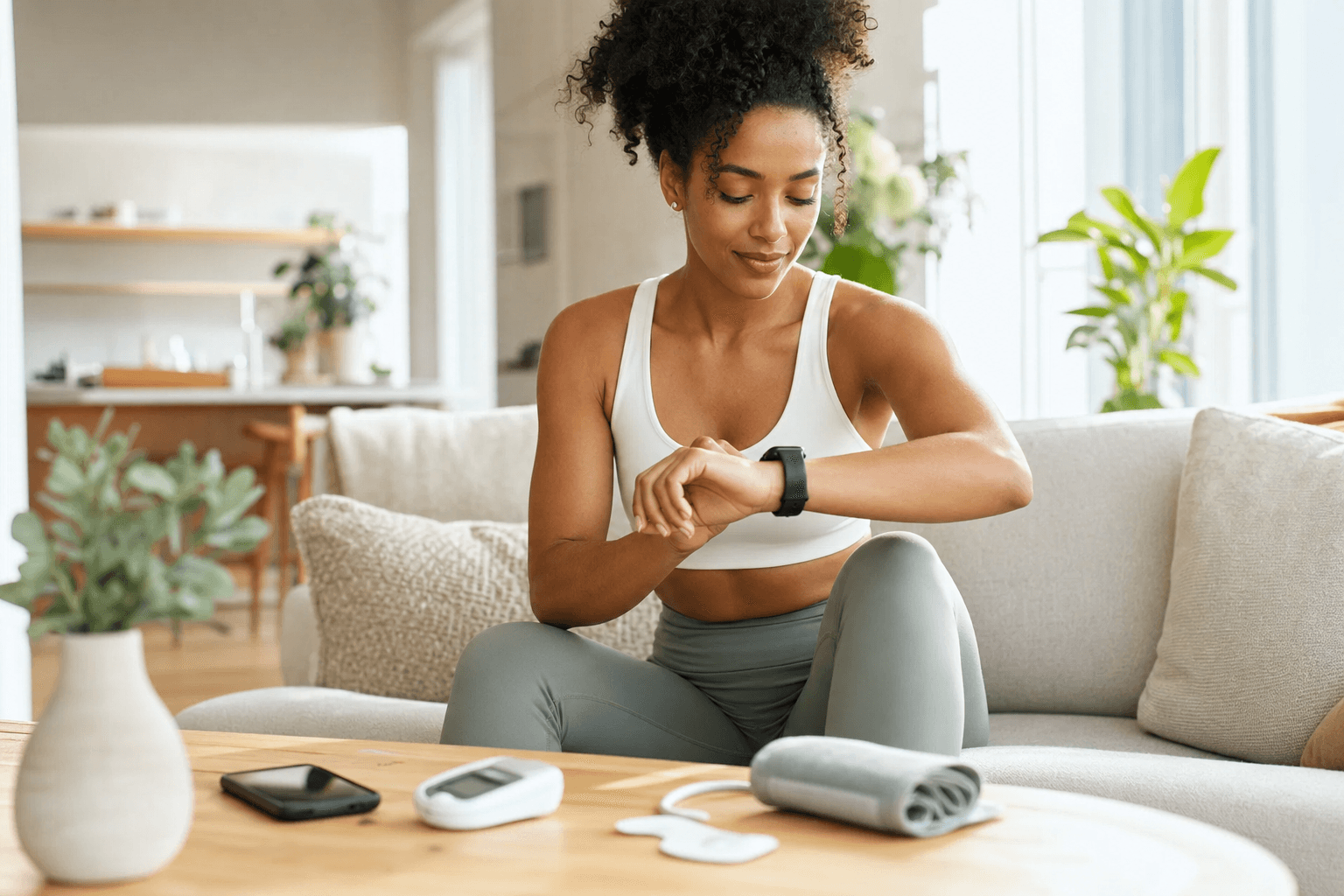
Too many gadgets, too little guidance
The market for health gadgets and apps grows every year. Smartwatches, rings, scales, sleep trackers, posture sensors and an endless supply of apps all promise to make you healthier. Most people do not need most of them. The challenge is not finding more options, but choosing the few that genuinely help.
This article offers a simple framework you can apply to any product before you spend your money or your attention.
Start with a question, not a product
The most common mistake is buying a device and then looking for a reason to use it. Reverse that order. Begin with a real question about your own health.
Do you want to move more during a sedentary work week? Are you trying to understand why your sleep feels poor? Do you have a condition, such as high blood pressure, that benefits from regular tracking?
If you cannot name the question a product answers, you probably do not need it. A clear purpose also tells you when the device has done its job and can fade into the background.
The four questions to ask
Once you have a purpose, run any candidate through four checks.
Does it measure something useful, accurately enough
Not every measurement is meaningful, and not every device is accurate. Look for products that have been independently tested, especially for anything that informs a health decision, such as a blood pressure monitor. For motivation tools like step counters, perfect accuracy matters less, because the value is in the nudge, not the precise number.
Will it actually change what you do
This is the question most people skip. A tool only helps if it leads to a different action: more walking, an earlier appointment, a steadier routine. If you suspect you will glance at the data once and forget it, save your money.
Who controls the data
Before committing, check how the product handles your information. Can you see its privacy policy easily? Does it explain what is collected and shared? Can you delete your data and close the account? A respectful answer to these questions is a good sign about the company behind the product.
What is the real cost
Look beyond the sticker price. Many apps and devices rely on monthly subscriptions, and the ongoing fee can dwarf the upfront cost. Ask whether the long-term value justifies the long-term spend, and whether a free or cheaper option would serve the same purpose.
Beware the warning signs
A few patterns should make you cautious. Be wary of products that promise to diagnose serious illness on their own, that use dramatic fear-based marketing, or that make claims sounding too good to be true. Vague privacy policies, pressure to subscribe quickly, and a lack of any independent testing are all reasons to pause.
Genuine health tools tend to be modest in their claims. They support a habit or a relationship with your care team rather than promising to transform your health by themselves.
Match the tool to your life
The best device for someone else may be wrong for you. Consider how it fits your daily routine. A tracker you must charge constantly may end up in a drawer. An app with a cluttered interface may go unopened. In a warm climate like Mauritius, comfort and water resistance can matter for anything worn during exercise.
Simplicity usually wins. A tool you will actually use every day beats a feature-packed one you abandon after a fortnight.
When to involve your doctor
If you are considering health tech to manage a diagnosed condition, it is worth a brief conversation with your doctor first. They can tell you which measurements are meaningful for your situation, what target ranges to watch, and whether a particular type of device suits you. This turns a gadget into a genuine part of your care rather than a source of confusion.
The takeaway
Choosing health tech well is mostly about discipline, not expertise. Start with a real question, demand useful and reasonably accurate measurement, insist that it change a decision, check who controls your data, and weigh the true cost.
Apply that framework and you will end up with a small set of tools that quietly support your health, while ignoring the much larger pile that would only have cluttered your wrist, your phone and your mind.
Smart health technology supports a longer, healthier life. Explore the wider Medtech health ecosystem.